Left crank arm, spider, true dual-sided crankset or pedals: the best power meter is not necessarily the most expensive. It must match your bike, your head unit and, above all, what you will actually do with your power data.
In 2026, choosing a power meter is no longer just about chasing the smallest accuracy figure: measurement location, compatibility, battery life, weight, head-unit ecosystem and the way you will use the data all matter.
2026 cycling power meter comparison table
Velo-Perso prices checked on September 3, 2026. Favero models are shown as current market references; manufacturer pricing may vary by country.
| Model | Architecture | Measurement | Accuracy | Battery life | Weight / integration | Price | Best for | Link |
|---|---|---|---|---|---|---|---|---|
| Left crank | Left ×2 | ±2% measurement | 90 h | Sensor adds ≈10 g | 299 € | First power meter | View |
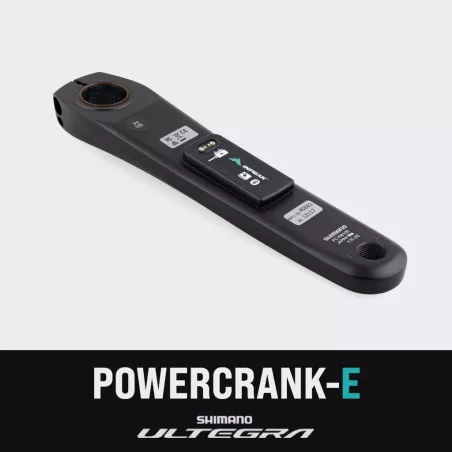 | Left crank | Left ×2 | ±2% measurement | 90 h | Shimano integration | 359 € | Ultegra without replacing the crankset | View |
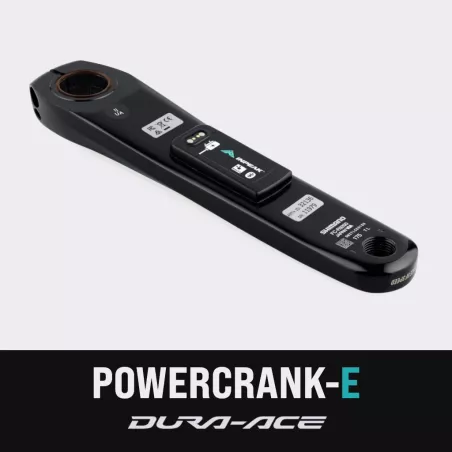 | Left crank | Left ×2 | ±2% measurement | 90 h | Dura-Ace finish | 419 € | Add power to Dura-Ace | View |
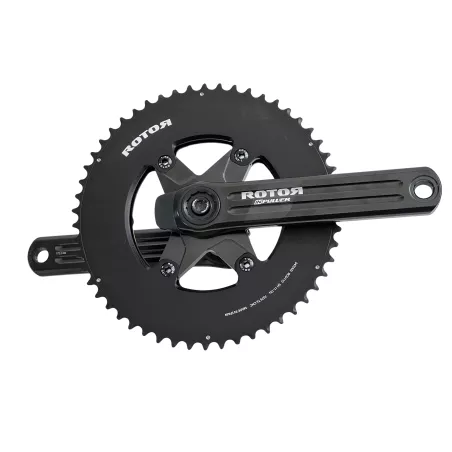 | In the axle | Single-sided | Rotor specification | AA battery | Complete crankset | 599 € | Long battery life / simple Rotor setup | View |
 | Spider | Total power | ±1,5 % | 350 h | 128 g · 12 mm | 342,90 € | Rotor upgrade | View |
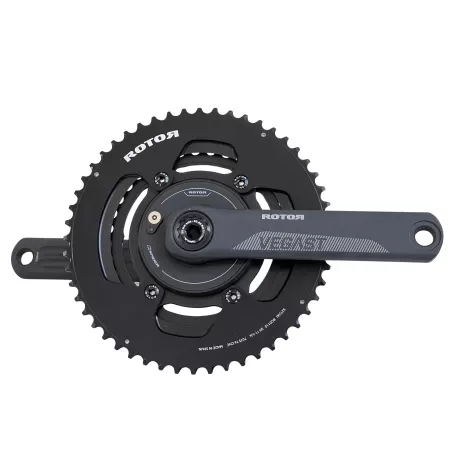 | Spider + crankset | Total power | ±1.5% sensor | 350 h | ≈768 g, 30 mm axle, VP checked | 699 € | Upgradeable complete crankset | View |
 | Spider + crankset | Total power | ±1.5% sensor | 350 h | 24 or 30 mm | 799 € | Performance / configuration | View |
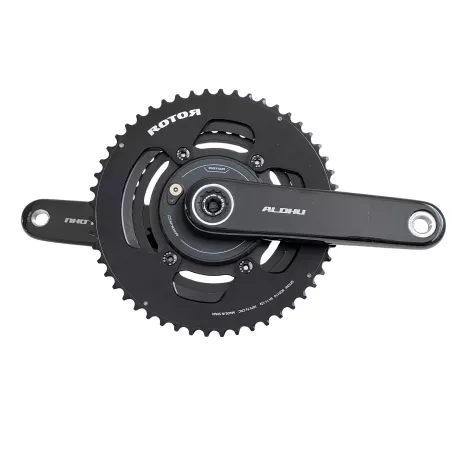 | Spider + crankset | Total power | ±1.5% sensor | 350 h | 640 g · 30 mm axle | 899,90 € | Weight / climbing | View |
 | Axle + crank arm | True dual-sided | ±1,5 % | Up to 250 h | Complete crankset | 899 € | L/R analysis | View |
 Favero PRO RS-1SPD-SL market reference Favero PRO RS-1SPD-SL market reference | Left pedal | Left ×2 | ±1 % | 160 h | 124.8 g left sensor pedal | 363 €* | Easy bike-to-bike transfer | Manufacturer |
 Favero PRO RS-2SPD-SL market reference Favero PRO RS-2SPD-SL market reference | Pedals | True dual-sided | ±1 % | 160 h | 124.8 g per sensor pedal | 578 €* | Dual-sided + easy transfer | Manufacturer |
* Favero manufacturer prices displayed when checked on September 3, 2026; they may vary by country and tax rules. Favero models are market references here, not Velo-Perso products. The price shown on each Velo-Perso product page at checkout prevails.
Alpe d’Huez: what power shows before heart rate has time to react
A power meter becomes meaningful when it turns a sensation into usable data. A personal example: Alpe d’Huez, finishing with a deliberate final Z5 effort.
A measurable final effort
On this climb in 2019, I finished the final hairpin with about 1 min 30 at around 480 W average, with passages close to 500 W. My MAP at the time was around 450 W at 80 kg.
On a long climb ridden at high intensity, power lets you pace around a sustainable effort and, if reserves remain, finish decisively in Z5. During a mountain training camp, this short high-intensity stimulus can help avoid doing only tempo and threshold work — although dedicated sessions remain the cleaner way to target each zone.
“Know thyself”… on the bike too
The Greek maxim “Know thyself”, traditionally associated with Socrates, neatly sums up the value of a long-term power history.
By using a power meter continuously since 2012, I have accumulated data from very different rides: peak form, comebacks, mountains, flat roads, short efforts, long climbs, fatigue and exceptional days. That history now gives me personal reference points that are far more useful than a generic number.
The goal is not to stare at the head unit all the time. The goal is to know: “Today, what intensity is realistic for me on this effort?”
“Data becomes truly powerful when it eventually teaches you how to ride without having to think about it all the time.”
Olivier Bally · Velo-Perso.com · power-meter user since 2012INPEAK POWERCRANK-E: try power without rebuilding your bike
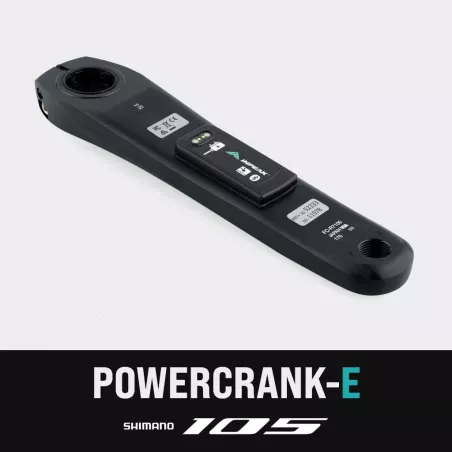
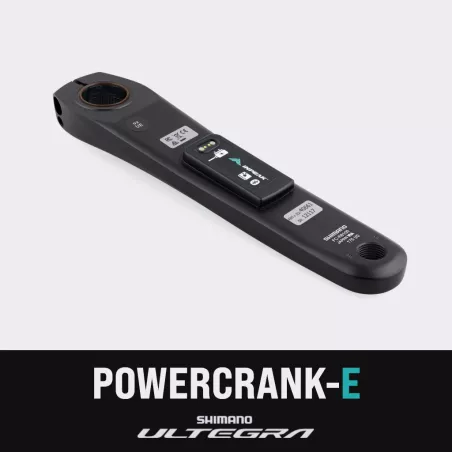
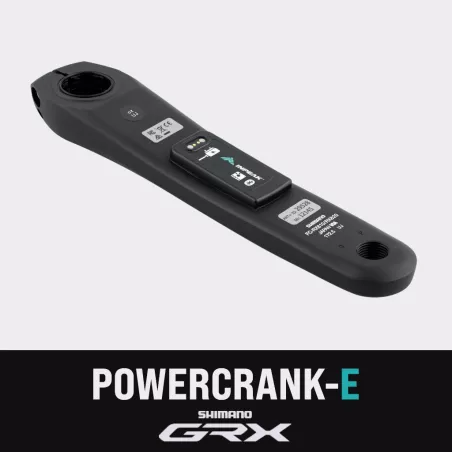
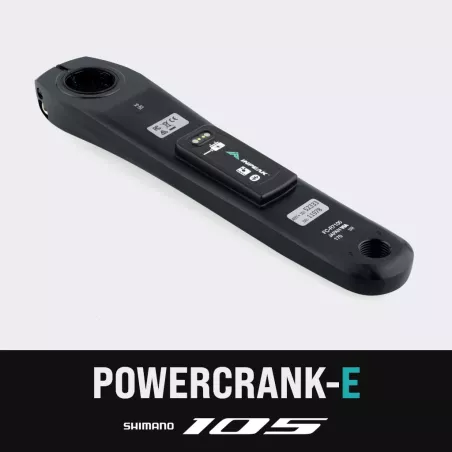
Already riding a Shimano 105, Ultegra or Dura-Ace crankset? Replacing only the left crank arm is the simplest way to discover whether power will actually change the way you ride.
INPEAK 105 FC-R7100
The most rational entry point for discovering power on Shimano 105 12-speed.
INPEAK Ultegra FC-R8100
A clean way to keep an excellent Ultegra crankset without changing chainrings or bottom bracket.
INPEAK Dura-Ace FC-R9200
To retain the look and finish of a Dura-Ace setup.
±2% accuracy does not mean ±2% versus your true total power
With a left-only crank meter, you must distinguish sensor accuracy and the physiological left/right assumption.
Example: 250 W truly produced
With a true 53.5% left / 46.5% right balance:
The extrapolated left-side reading then shows about +7% versus the true 250 W, even if the left leg itself was measured correctly.
What this changes over time
If your balance stays stable, a left-only meter can be highly repeatable and excellent for tracking training. The discrepancy matters most if asymmetry changes with fatigue, intensity, injury or over the years.
If you later switch to a 2INpower or dual-sided pedals, you obtain a different reference. Your old records remain useful, but they may not be directly comparable watt for watt.
INspider V2: miniaturisation, aero integration, battery life and total power
In 2026, adding a power meter no longer necessarily means adding noticeable weight or compromising the look of a bike.
A power-meter spider that disappears into the bike
INspider measures total power transmitted through the crankset while remaining extremely slim. Velo-Perso measured about 129 g; Rotor states 128 g and 12 mm thickness.
The spider also gives the chainring area a clean finish. This is a good definition of a 2026 power meter: miniaturised, light, rechargeable, accurate, discreet, with enough battery life to make charging far less intrusive.
View INspider V2Velo-Perso unboxing: see the real size of the power meter
Specifications give grams and millimetres. The unboxing shows far better how thin and light INspider has become, and where the electronics physically sit.
The video mainly shows the real scale of the component: the electronics are now compact enough to integrate into the crankset without materially changing its weight or appearance.
What we like less — and what we prefer to tell you before you buy
No power meter is perfect. The limitations below matter if you want to choose coherently from the start and avoid buying something you will want to replace too quickly.
INPEAK 105: the crankset remains a 105
The sensor adds very little weight, but it does not turn a 105 crankset into an ultra-light crankset.
If weight becomes a priority, a budget around €700 already opens the door to some lighter complete cranksets with more advanced measurement. The 105 remains above all an excellent discovery purchase.
INPEAK Ultegra / Dura-Ace: future upgrades
On an already high-end bike, you may like the data enough to later want total or true dual-sided measurement.
The ±2% specification does not include the physiological error introduced by left ×2 extrapolation. If your balance changes, compare historical data cautiously with a future dual-sided meter.
INspider 24 mm: not a magic weight-saving upgrade
On Vegast and Aldhu, the 24 mm option is mainly about easy integration with Shimano-type bottom brackets. Moving to INspider alone does not create a major weight saving.
The 30 mm axle can reduce total weight, but it often requires a bottom-bracket change.
INspider: check compatibility first
Frame standard, axle diameter, spacers, chainrings, tools and installation should all be checked in advance.
The 24/30 mm ecosystem and modern bottom brackets allow a solution for virtually every current road frame, but not without planning. Contact Velo-Perso if in doubt.
INspider V1: beware of old stock
V1 generated more reliability feedback, particularly around sealing. V2 was substantially revised, with a new structure and sealing control.
Velo-Perso now sells V2 only. During our first 18 months selling V2, we recorded no warranty or after-sales claim related to the power meter. This is a statistic from our own sold units, not a worldwide reliability statistic.
Pedals: convenient, but not neutral
Unbeatable for moving between bikes, they lock you into a pedal/cleat interface, may slightly alter stack and Q-factor, and remain more exposed in a crash.
Reliability also depends on the head unit
A power meter can measure perfectly yet deliver a poor experience if the connection, protocol or head unit handles the data badly.
Why I prefer Garmin + ANT+ on the road
In my daily use, Garmin is currently the ecosystem I find the most stable and predictable with power meters. With Rotor, we particularly prefer ANT+ outdoors.
That does not mean Wahoo, Hammerhead or other units are incompatible: it is a practical recommendation when the priority is to minimise connection surprises.
Charging cables matter much less now
The claimed 90 h of POWERCRANK-E, 160 h of Favero PRO RS and up to 350 h of INspider V2 change everyday use: charging is no longer a daily constraint.
For a training camp, a properly charged power meter can easily cover many days of riding. The power meter is no longer necessarily the device whose cable you need to watch every evening.
What customers, Reddit and independent tests say
Customer reviews tell us about daily use, Reddit discussions surface spontaneous experiences, and instrumented tests compare multiple power sources. These three perspectives complement one another.
A crankset that evolves instead of being replaced
Julien V. explains that he started with a Vegast in 2018, added INspider in 2020, then moved to Aldhu Carbon crank arms in 2022. The same ecosystem therefore evolved from an aluminium crankset to a carbon setup with power measurement.
“I am not afraid of new developments because I know my crankset can easily be brought up to date.”
Power is useful… if you actually do something with it
The discussion starts with exactly the question of a roughly €350 single-sided meter. Responses repeatedly mention pacing, climbs, wind, fitness tracking and heart-rate lag. Others argue that if you do nothing with the data, it becomes just another number.
That is precisely the appeal of INPEAK: use it long enough to find out which camp you are in.
An interesting long-term report, but still one individual experience
In a discussion dedicated to INPEAK, a GRX user reports several years of use and a good overall experience, including support when he lost the battery-cover seal.
A Reddit report is not a laboratory test and cannot establish the reliability of an entire production run.
Encouraging first independent data
In July 2026, GPLama compared a Powercrank-E TWiN2 Ultegra against a Tacx NEO 3M and Favero Assioma PRO RS pedals. In this first indoor dataset, INPEAK tracked the references closely through intensity changes and sprints.
Important: this is the dual-sided TWiN2, not the three single-left POWERCRANK-E models sold here. Outdoor testing was still pending at the time of that first publication.
Favero PRO RS: a more relevant current reference than the old Uno/Duo
The PRO RS range is now the more relevant road comparison: Shimano SPD-SL-compatible interface, rechargeable battery, ANT+/Bluetooth and claimed runtime up to 160 h.
PRO RS-1
Left ×2 measurement, claimed ±1%, 124.8 g for the left sensor pedal, up to 160 h, and upgradeable to RS-2.
Manufacturer page →PRO RS-2
Two instrumented pedals, true dual-sided measurement, claimed ±1% and up to 160 h. Logical when easy transfer between bikes is the priority.
Manufacturer page →Which power meter matches your real question?
“Will power really be useful to me?”
Left-side INPEAK. A simple test without replacing the whole crankset.
“I want total power + modularity”
INspider V2, with Vegast, Aldhu or Aldhu Carbon depending on budget and weight.
“I want true left and right measurement”
2INpower SL or dual-sided pedals for detailed analysis.
“I often switch bikes”
Pedals. The easiest architecture to move between bikes.
What should you do with your watts?
A power meter does not make you stronger. It gives you a unit of measurement.
Start simple: 3-second power, a few climbs, compare easy and hard rides, then add zones if useful. You do not have to become a slave to the number.
Full usage guideEven minimal use is useful
You ride by feel and only glance at power occasionally. After the ride, you can still see the true intensity of a climb, your best 5 minutes, the cost of a headwind or the difference between two levels of form.
That is often how power-meter use begins.
Questions to ask before buying
Is a left-only INPEAK enough to start?
How can ±2% become roughly a 7% discrepancy?
Does INspider truly measure each leg separately?
Why choose INPEAK 105 at €299?
Why choose INspider rather than a left crank arm?
24 or 30 mm axle for Rotor INspider?
Do you have to watch power all the time?
Power meter or heart rate?
Why does the GPS head unit matter for reliability?
Does Velo-Perso still sell INspider V1?
Check, compare, go further
Still choosing between two architectures?
Send us your bike model, current crankset, crank length, GPS head unit and what you want to do with power. We can check the setup before you buy.