Oversized Derailleur Cages (OSPW) — FAQ 2026
Learn about real-world gains, compatibility (Shimano 12-speed, SRAM AXS, Campagnolo),
chain length, B-screw setup, and pulley maintenance.
2026 update: installation warnings, “lube first” logic, and market trends (stiffness / aero / weight).
The idea (simple)
- Larger pulleys softer chain angle → lower friction
- Ceramic bearings reduced drivetrain losses
- 2026 aero more refined shapes, sometimes slightly heavier
The golden rule (performance)
- Lube first, oversized cage second
- Gains don’t simply add up: they combine
- Most disappointments come from setup (chain / B-screw / capacity)
Velo-Perso tip: if your drivetrain isn’t already optimized, start with proper lubrication (or wax), then consider ceramic pulleys / an oversized cage.
1 What is an oversized derailleur cage (OSPW)?
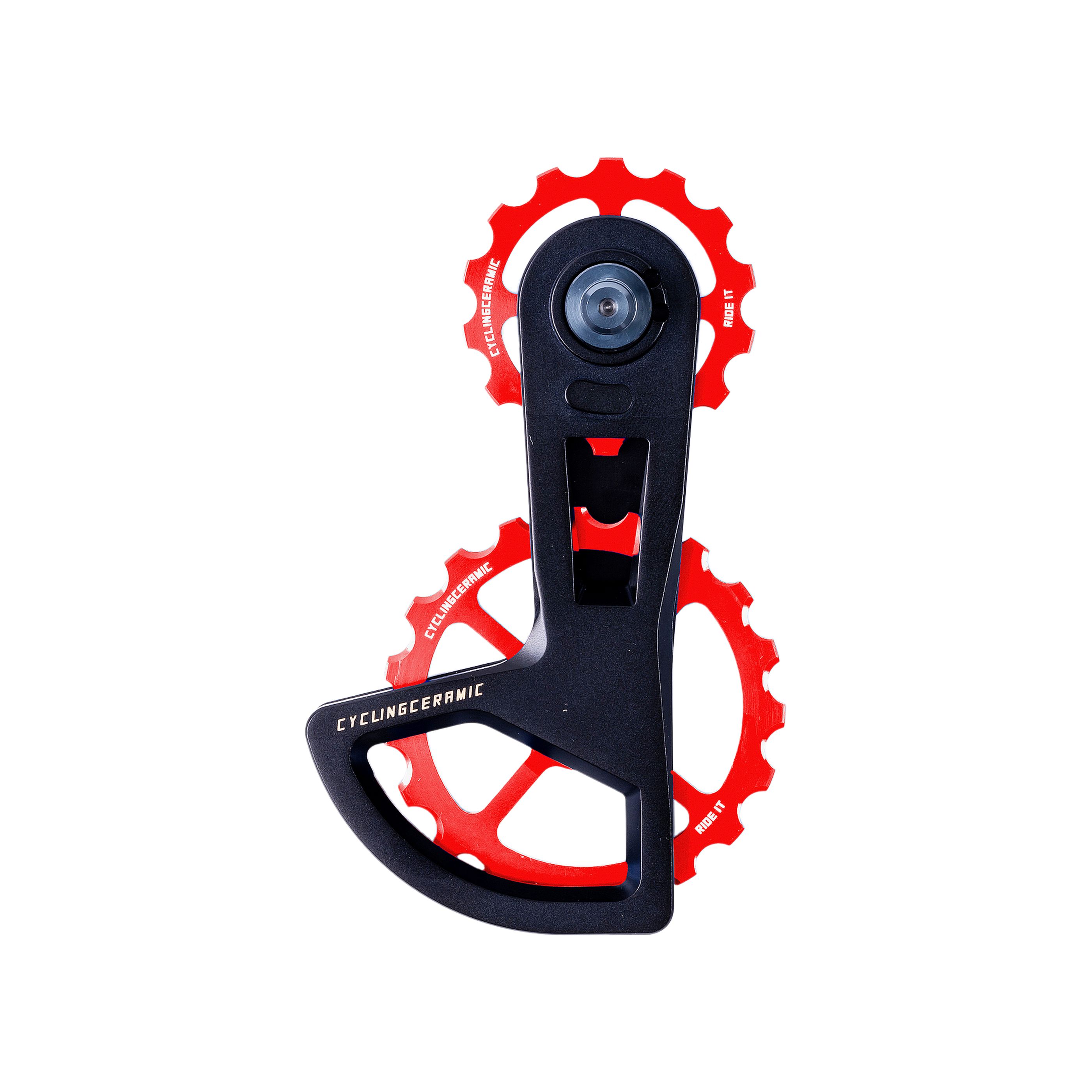
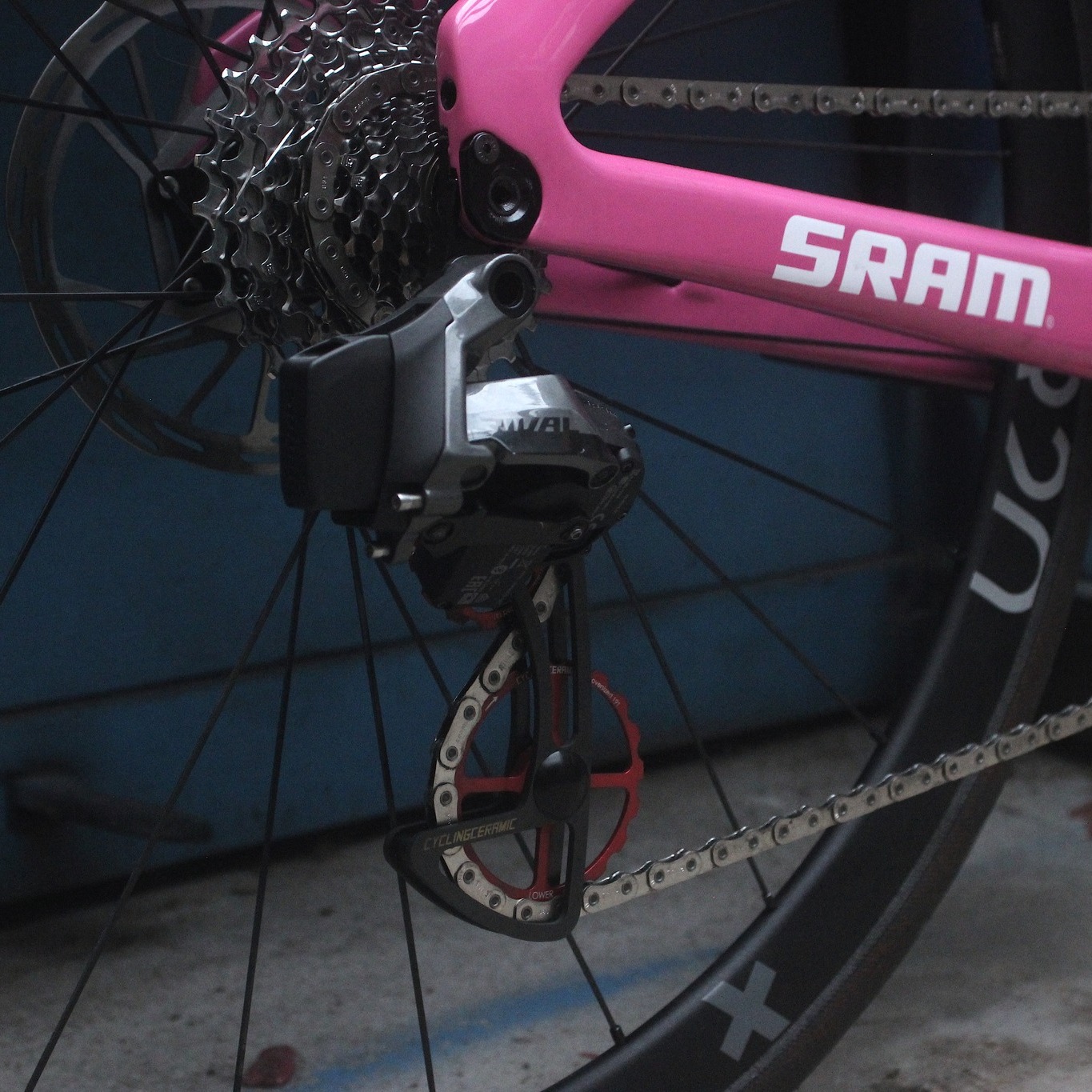
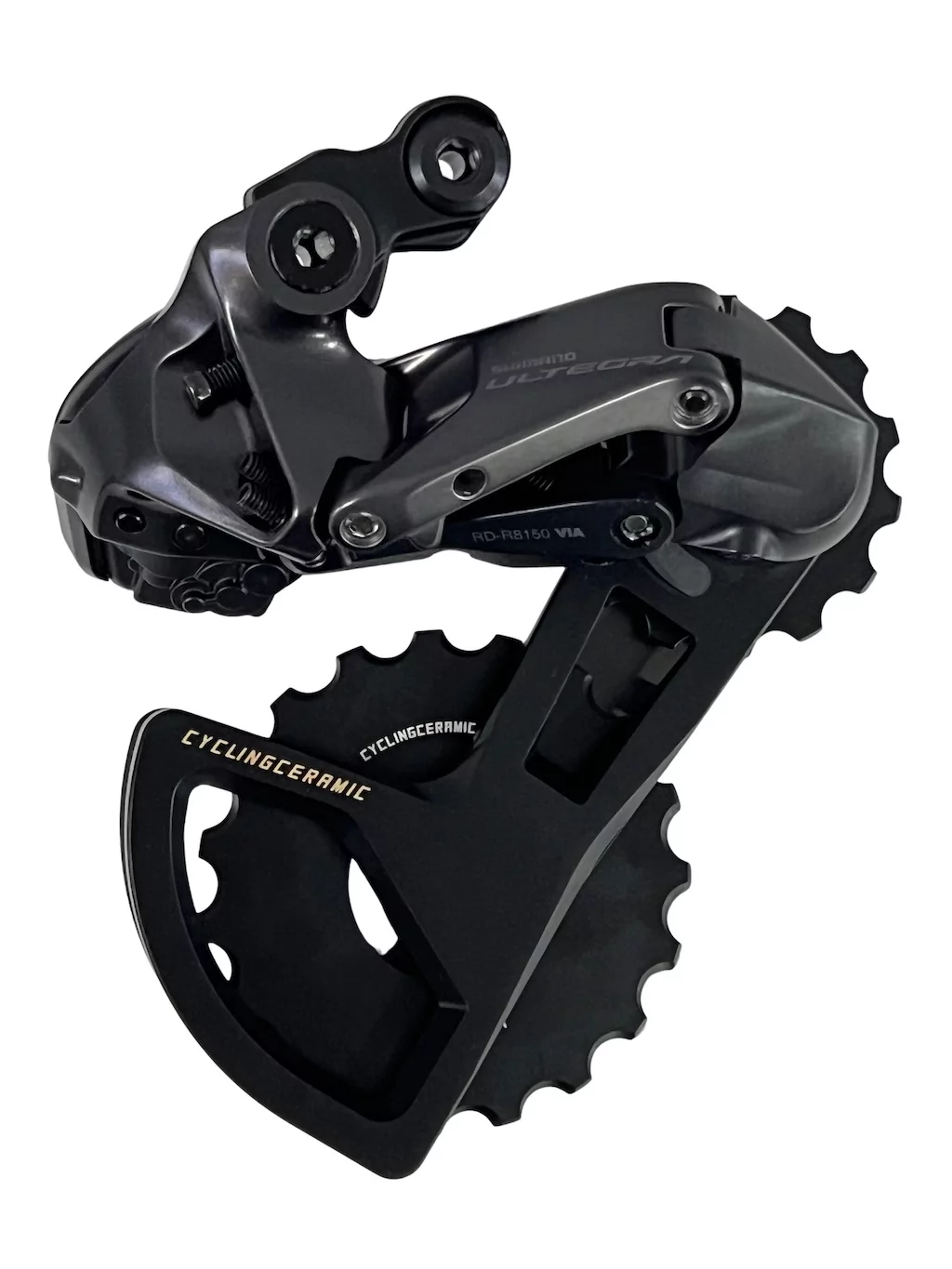
An oversized derailleur cage (OSPW) replaces the stock rear derailleur cage with a design made for
larger pulleys. With a smoother chain path, the chain “bends” less:
lower friction and a more fluid drivetrain feel.
2026 key point: many cages are now stiffer and more aero-optimized
(sometimes with a +30–40 g weight trade-off).
2 What are the real benefits (efficiency, durability, shifting)?
- Reduced friction: smoother chain angle → fewer mechanical losses.
- Better efficiency: bearings + improved chain guidance → “freeer” drivetrain feel.
- Durability: pulleys spin slower → wear is often reduced (with comparable maintenance).
- Cleaner shifting: in 2026, higher stiffness often means more precise gear changes.
3 Gains: what can you realistically expect?
On road bikes, think in terms of an order of magnitude: a few watts when everything is right
(good chain/cassette condition, correct setup, appropriate lubrication). The faster/harder you ride (TT / triathlon),
the more meaningful the upgrade becomes.
If you don’t speak “watts”: you’ll mostly notice smoothness and consistent drivetrain feel.
The best results come from a flawless setup.
4 Wax / lubrication: do the gains add up?
Not as a simple sum. Gains combine. A waxed chain (or a top-quality oil) can be extremely effective
on a stock drivetrain: the chain angle stays the same, but sliding friction drops a lot.
Recommended path: lubrication & cleaning → ceramic pulleys → oversized cage.
5 How to choose in 2026 (Race / Pro / Aero)?
In 2026, the market favors stiffer cages and more refined aero.
Aero versions can be slightly heavier, but make sense at high speed (TT/tri).
- All-round road: compatibility + stiffness + easy maintenance.
- TT / triathlon: aero designs (solid pulleys, optimized surfaces).
- Best compromise: Race / Pro ranges.
Example:
Shimano Aero Cage (R8150/9250).
6 Shimano 12-speed compatibility (R9250 / R8150 / R7100)
The key is not “Shimano 12-speed” in general, but your exact derailleur,
its capacity (largest sprocket / tooth difference), and correct B-screw adjustment.
Warning: an oversized cage does not make a derailleur “compatible with any cassette”.
The limit is usually set by derailleur capacity.
Quick access:
Shimano cages ·
Best-seller Shimano
7 SRAM AXS compatibility + SRAM Red E1 case
Separate 2x road from 1x (different cassettes),
then adjust chain length if you move to larger pulleys.
SRAM Red E1 is already “~70%” aligned with an OSPW performance approach:
carbon cage, slightly larger pulleys,
ceramic bearings. SRAM has often been a materials pioneer (carbon) in high-end road.
Quick access:
SRAM cages ·
Best-seller SRAM
8 Campagnolo compatibility (12-speed / WRL)
Campagnolo requires precise identification: 12-speed mechanical vs WRL.
Choose a cage designed for your exact derailleur.
See Campagnolo cages.
9 Installation: 3 warnings that prevent most issues
- Chain: plan a longer chain (often +2 to +4 links).
- B-screw: set upper pulley-to-cassette gap (especially on the biggest sprocket).
- Capacity: don’t oversize the cassette beyond what the derailleur can handle.
If your drivetrain is worn (chain/cassette), a premium cage won’t “fix” it — it will expose it.
10 Noise / clicking after install: quick checklist
- Chain too short: add 1–2 links.
- B-screw: increase the gap slightly on the biggest sprocket.
- Indexing: fine-tune (cable / Di2 / AXS).
- Hanger: check alignment.
11 Ceramic pulley maintenance
- Clean regularly with mild products (avoid harsh solvents).
- Light lubrication: too much oil attracts dirt.
- Check play and tooth wear; replace if play is excessive.
12 Alternative: start with ceramic pulleys first
For a progressive upgrade, install
ceramic derailleur pulleys
on your stock cage: smoother feel, controlled budget, and an excellent first step before a full OSPW system.