



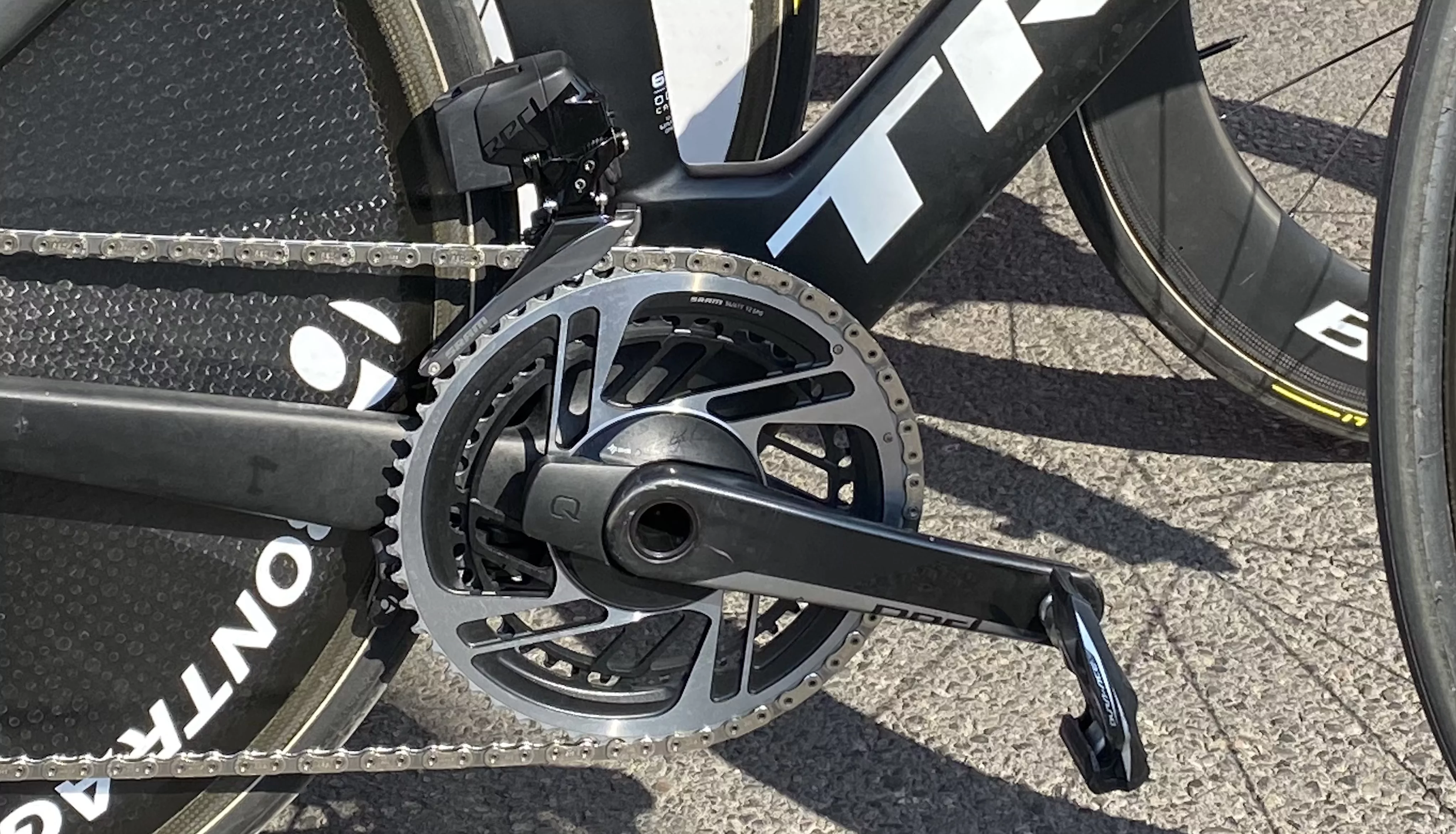
Should we ban 54×10?
Friction, safety, tactics: breaking down the UCI’s 10.46 m (≈54×11) cap, SRAM’s legal action, and what 54×10/55×10 really changes in racing. “Gear blog” tone with field notes and useful numbers.
1) Friction: what the test shows… and the golden rule
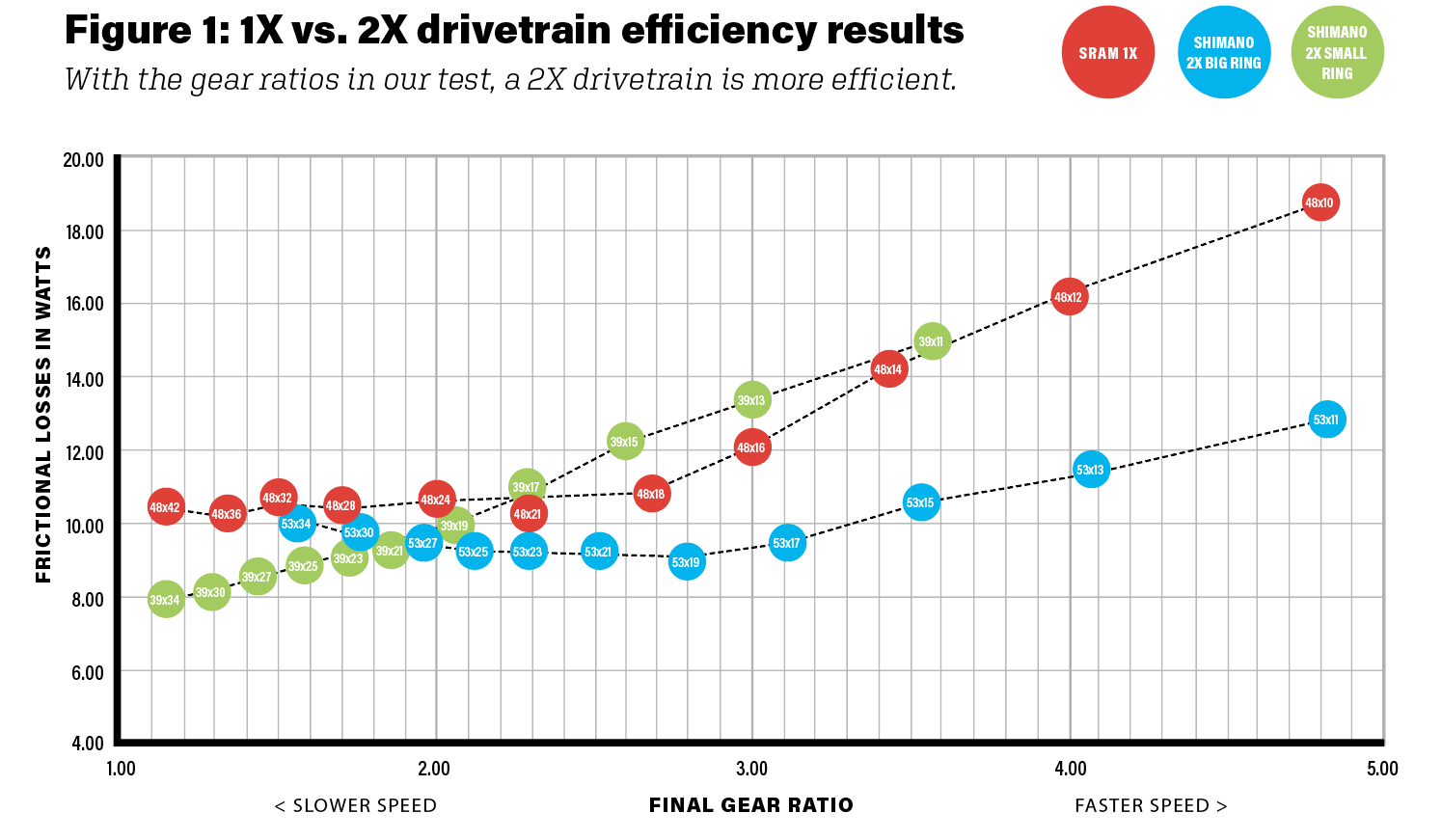
The Velo/Outside bench test (250 W / 95 rpm) compares a 1x (48T + 10-33 cassette) with a 2x (53/39 + 11-34). Result: the 2x records lower losses in each optimal ratio (average ≈9.45 W) than the 1x (≈12.24 W), with a marked penalty as you approach the 10-tooth cog (e.g., 48×10 ≈ +6 W vs 53×11). This reflects a simple rule: at the same rollout, “big ring + larger rear cog (mid-cassette)” is more efficient than “small ring + small rear cog.”
2) Legal context: SRAM challenges, the UCI responds
SRAM brought a complaint to the Belgian Competition Authority regarding the Maximum Gear Ratio Test Protocol (cap 10.46 m, equivalent to 54×11), trialed at the Tour of Guangxi and potentially generalized in 2026. The UCI issued an official response: stakeholder consultation, a safety-driven approach, and majority rider support for the trial. Read the UCI press release (EN).
3) Tactics: what does 54×10 / 55×10 do in a race?
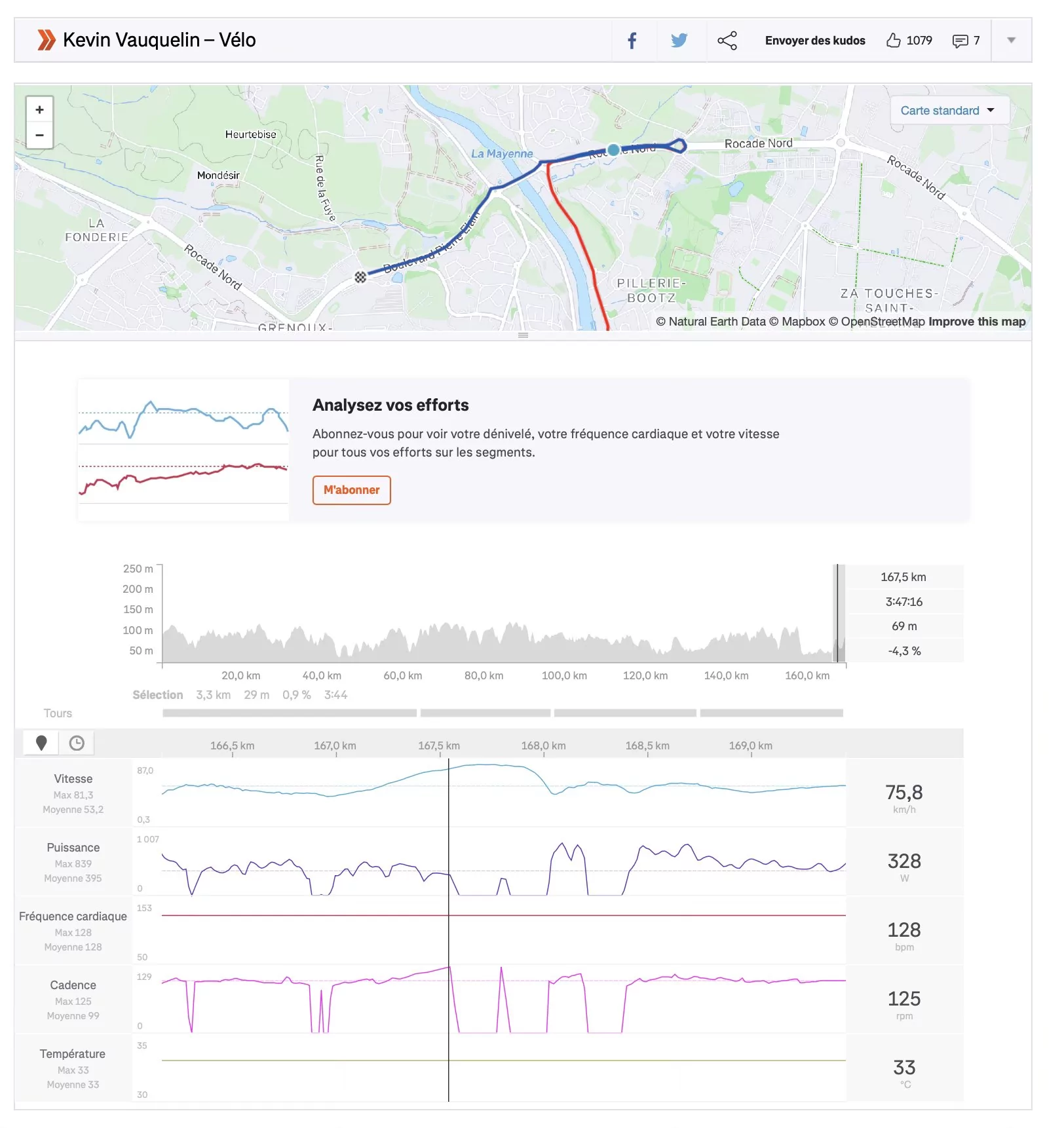
On finales with a downhill dip, the 10-tooth can be used to tighten the run-in: the bunch lines out, rivals must move into the wind to regain positions, and you arrive at the sprint with fewer opponents. The advantage becomes clear mainly above ~70–80 km/h — below that, 54×11 or 55×11 already cover most needs.
4) Cadence → speed (top gears)
Assumptions: same rollout as the UCI reference (54×11 = 10.46 m). Comparison SRAM AXS 54×10 (10-33 cassette) vs Shimano 55×11 (11-34 cassette) + reference 54×11 (= UCI cap). Speeds rounded.
| Cadence | SRAM 54×10 (10-33) | Shimano 55×11 (11-34) | Ref. 54×11 (10.46 m) |
|---|---|---|---|
| 90 rpm | 62.1 km/h | 57.5 km/h | 56.5 km/h |
| 100 rpm | 69.0 km/h | 63.9 km/h | 62.8 km/h |
| 110 rpm | 75.9 km/h | 70.3 km/h | 69.0 km/h |
| 120 rpm | 82.8 km/h | 76.7 km/h | 75.3 km/h |
Takeaway: the 54×10 advantage shows mainly at very high speed (≥70–80 km/h). The trade-off is that the 10-tooth is less efficient (friction) than an 11 at a similar ratio.
5) Note for sportive riders (real-world use)
Many amateurs like AXS because it’s compact, light and “plug-and-play”. A lot of riders cruise on 48×19 / 48×21: that’s the middle of the cassette, where losses are minimal—and a very common gear. The 10-tooth is really for very fast tailwind/descending scenarios.
6) 2026: two plausible scenarios
- The UCI loses (no convincing “safety ↔ gearing” link) → status quo, 54×10 stays legal.
- The UCI wins → 10.46 m cap becomes universal. Likely SRAM response: supply teams with 11-tooth start cassettes to preserve top speed, rather than forcing smaller rings on 10-33. The brand message would otherwise be awkward vs consumer bikes mostly on 48×35.